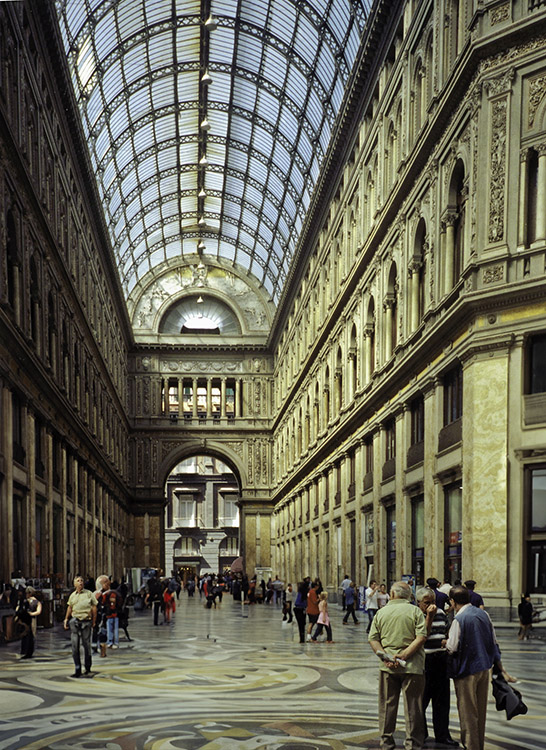
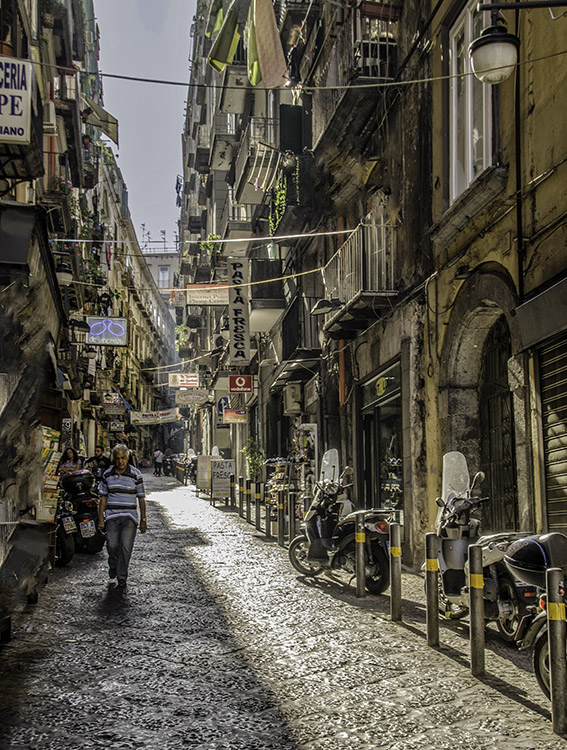
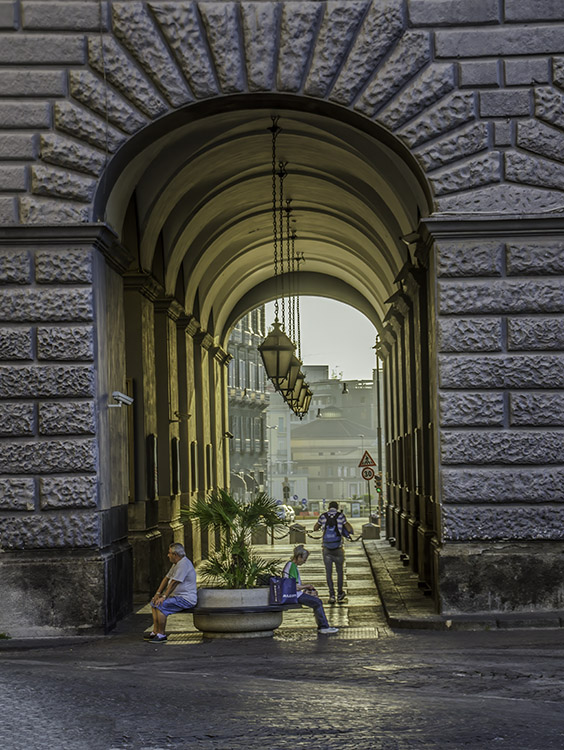
Naples, is rich in history and culture. Its origins date back to its foundation as Parthenope or Palaepolis in the 9th century B.C., and then established as Neapolis (New City) in the 6th century B.C. Over the centuries, Naples has seen the rise and fall of several civilizations, each leaving its mark on the city’s art and architecture.
As one one of Ancient Greece’s strongest colonies Naples was an important cultural hub. Even when taken over by the Romans, who used the city as a resort, it retained its Hellenistic culture, attracting historical figures like the poet Virgil. The city was the capital of the Duchy of Naples, the Kingdom of Sicily, the Kingdom of Naples, and finally the Two Sicilies - until the unification of Italy that took place in 1861.
Like the rest of Europe, Italy was impacted by the French Revolution. Napoleon’s army reached Naples in 1799 and established, albeit for a short time, the Parthenopean Republic. By the 1800s there were revolutions and the return to monarchy under the Kingdom of the Two Sicilies. When Italy was unified in 1860 the people of Naples voted to join the country, and in 1861 become part of the Kingdom of Italy.
Naples is the third-largest municipality in Italy by population, after Rome and Milan, and has the second or third-largest metropolitan area of Italy.
The city is home to several notable attractions:
Spaccanapoli: This bustling narrow street traverses Naples’ Centro Storico (historical center), and is the vibrant heart of this irresistible city.
Pizza: Naples is the birthplace of pizza. Pizzeria Gino Sorbillo is one of the best in the city, thanks to its focus on organic ingredients and local produce from the surrounding Campania region.
Christmas Alley (Via San Gregorio): Naples has a tradition of presepi (nativity scenes) dating back 1000 years. All year long, the narrow alleyway of Via San Gregorio teems with traditional presepe artisans.
Santa Chiara religious complex: This complex includes a church, monastery, tombs, an archaeological museum, and a large cloister decorated with majolica tiles.
Mount Vesuvius: Classified as a Stratovolcano, Mount Vesuvius can be seen for just about any location in Naples. You can take a bus tour from Naples to visit this magnificent natural phenomenon and climb up its slopes to peer into the crater.
Pompeii: Pompeii was an ancient city that sat in the shadow of the iconic Mount Vesuvius. This settlement was highly advanced and extensive and was destroyed at its peak during the devastating eruption of the volcano in 79 AD.
Naples. Love it or not so much. A common range of reactions. The city’s bustling streets, street art, inspiring cafes, and unique neighborhoods like the Spanish Quarter add to its allure. Don’t miss the stunning promenade, the coolest underground scene, and the slow lifestyle. At night, Naples comes alive.
Captivating History: there are ancient ruins, palaces, and churches on every corner. This is the birthplace of Pizza. I personally prefer less crust but this is where it all started. But what stands out for me is the authentic Experience: Naples offers a less touristy, more genuine encounter with Italy. The people are friendly, and the prices are reasonable.
The history of Naples/Napoli covers over 2,800 years. The Greeks called it Neápolis (“new city”) with the city being shaped by the Greeks, Romans, Byzantines, Normans, and Spanish. During the Renaissance, it as a center of art, science, and philosophy. At the same time the threat of Mount Vesuvius has always been present, destroying Pompeii and Herculaneum in 79 AD. Despite invasions, plagues, and political upheavals, Naples has survived.
Naples continues to be vibrant and blends history with modern life. What is special about Naples are its bustling streets, lively markets, and stunning architecture. You will see both crumbling and new architecture. Enjoy the streets and museums such as the Naples National Archaeological Museum.
For a number of years I feared Naples and avoided the city. Why? Crime. But enough people we know in Italy say bah to that and encouraged us to visit. We did, and have not looked back now. We have stayed in Naples a numer of times and I now rank it one of my favorite cities in Italy. It has a gritty feel. The streets are crowded. You can buy anything on the street. Heck I have seen kitchen appliances at pop-up corner markets!
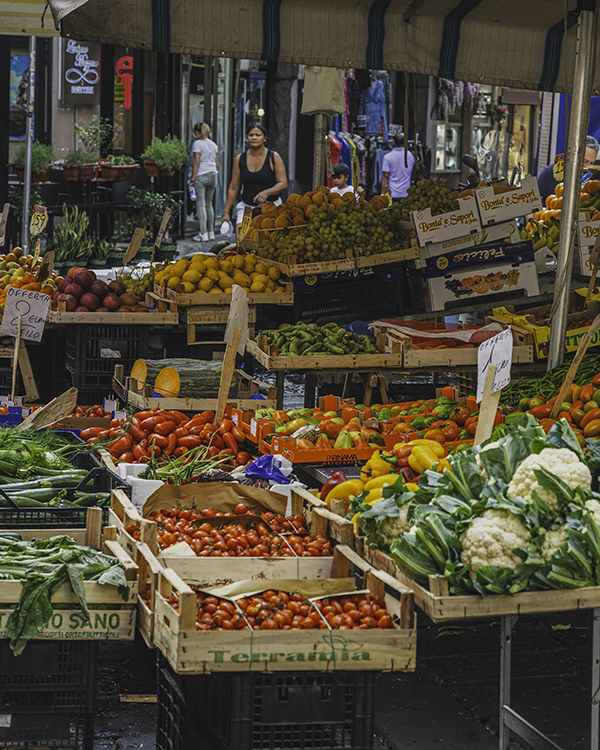
Look past the graffiti and garbage. You will see architecture and Italian life before your eyes. Onour 2023 visit I explored a number of areas and was really impressed with the street markets. No supermarket needed here! There is a vendor selling just about any kind of food you can think of.
There are four funiculars which transport you to the upper level of Naples. the Chiaia Funicular has four stations, and takes three minutes to take you from the Chiaia area up to Vomero district of Naples. Each have three of four stations on their climb to the upper levels of Napoli and the trip takes about four minutes. Regular bus tickets are accepted.
Walk the streets and enjoy. The streets are the living rooms of Naples. You will see chairs out in front of apartments, and families sitting and talking.
Be prepared to walk. There is a metro and a regional railway that runs under Naples. It took awhile on my 2023 visit to Naples to get the hang of the system, you can cover some considerable distances, but also be prepared to walk. The lines don't make up a network that you would find in a city like Paris.
Our 2023 trip summary has highlights of our visit. I enjoyed the churches, and cloisters (of course). I also discovered Via Pignasecca, an interesting street with fish, vegetable and fruit vendors. Everyone was giving off such a great vibe.
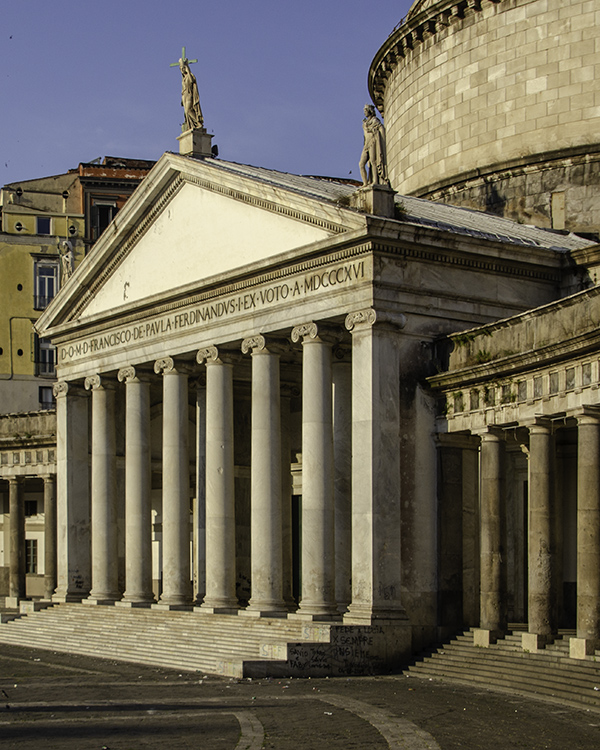
photos: mytravellinglens.com
Basilica San Francesco da Paola - the design of the church is reminiscent of the Pantheon in Rome, it is an important example of neoclassical architecture in Italy.
photos: mytravellinglens.com
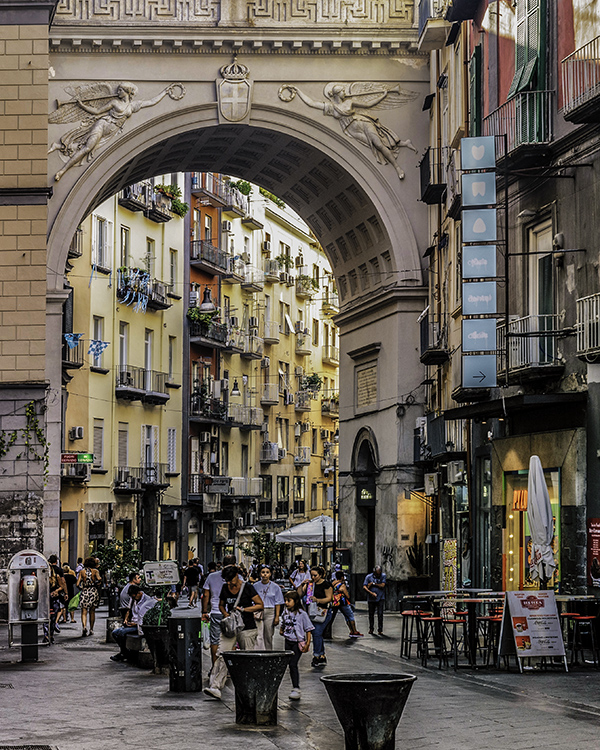
Ponte di Chiaia built to connect the San Carlo area to the hill of Pizzofalcone.
photos: mytravellinglens.com
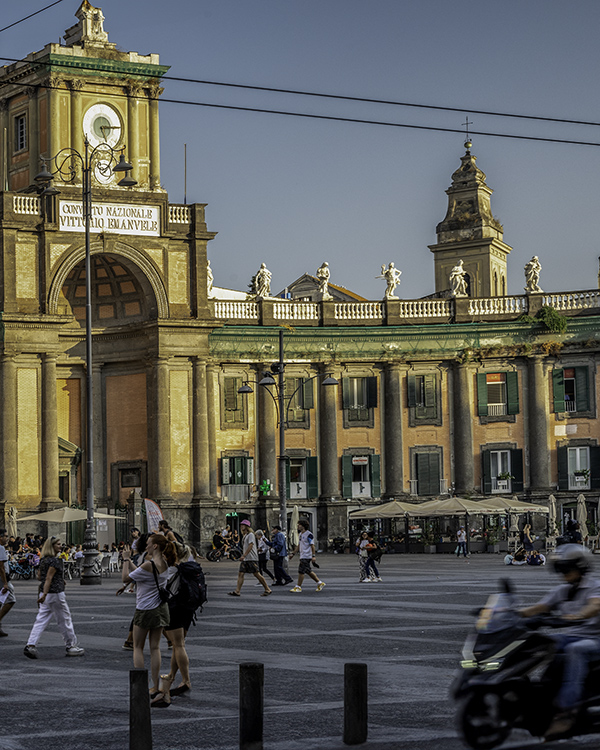
Convitto Nazionale Vittorio Emanuele a historic building, originally a boarding school of the Jesuits, then a boarding school of Vittorio Emanuele II, the first kind of unified Italy. This was a previous convent and two cloisters remain. Today the building continues to provide education and accommodation to students from across Italy.
photos: mytravellinglens.com
Naples is a city of street markets. You can buy almost anything on the street.
photos: mytravellinglens.com
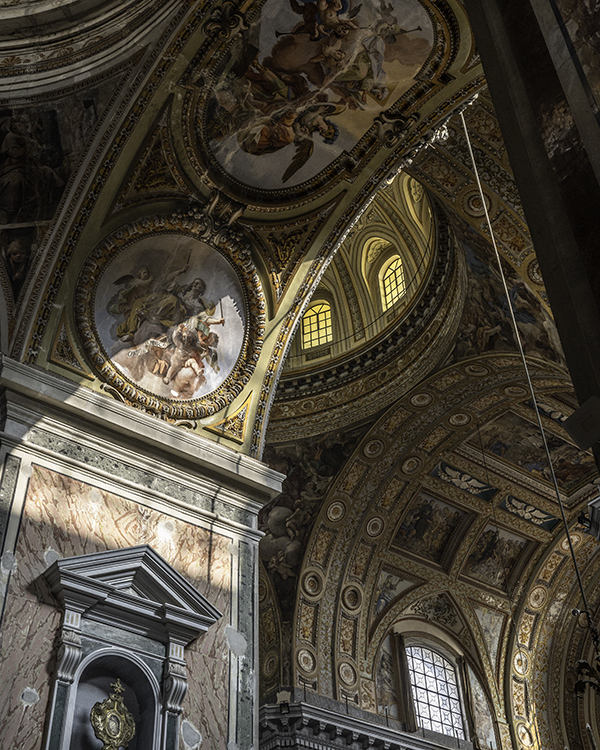
The Gesù Nuovo is so impressive to visit. The city is known for its rich religious history, with about 500 churches Naples is referred to as "the city of 500 domes". If you take in all religious buildings, the number grows to more than 10,000. Naples has the highest number of churches in Italy.
photos: mytravellinglens.com
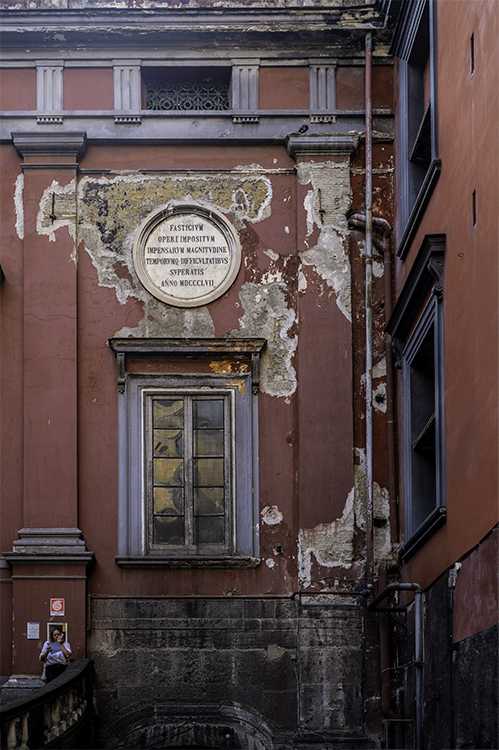
Don't expect to see a city where everything is shinning and new. This is a city with a long history, the historic buildings show their age. It is not looking and saying, oh, how things are falling apart, but look at the age of that building.
Travel Journal - Italy
@Glenn Marcus