
Our first visit to Perugia was in 1995. Losing our credit card turned our attention away from enjoying the city but we have returned on other trips and enjoyed the town much more. The architecture and history are interesting. Established by the Etruscians, conquered by the Romans, a free municipality in the Middle Ages, under papal control in the 16th Century - a lot happened in this town.
The town sits on a hill, nd the historic centre is a maze of pedestrian streets. Find a parking lots, and walk up to the centre of the city - if you pick one of the parking lots with esculators, the climb is all the easier. But, as we found there may be an esculator on the map, but it does not necessarily mean it works! T
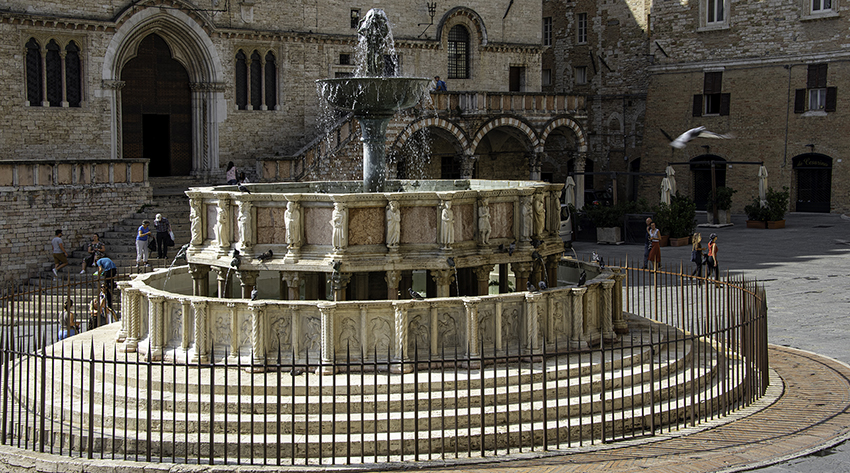
he Piazza IV Novembre is the historic centre. There are steep alleys which lead to the old Etruscan walls and the Porta Marzia, Porta Sole, Porta Cornea, Porta Trasimena, Porta della Mandorla and the Arco Etrusco. On our most recent trip, in 2023, I enjoyed just getting lost in the town, exploring the many winding streets. The piazza is impressive surrounded by grand buildings. The large Fontanna Maggiore is in the centre was built in the second half of the 12th century. The fountain was the the terminus of the the aqueduct supplying water to the town from Mount Pacciano. The statues on the fountain are by Nicola and Giovanni Pisano.
The Palazzo Dei Priori, built in 1298, has a large stairway and a portal leading to Sala dei Notari, a vaulted roomwith great frescoes. Today it holds the National Gallery of Umbria.
The Cathedral of San Lorenzo took more than a century to complete, with work done hear the the 1400s. The first church was built in the 9th Century on an Etruscan forum, it was rebuilt in the 11th and 12th Centuries. Work on the building we see today started in 1345 and ended in 1490. The pink marble was inspired by the cathedral in Arezzo. The Justice Stone is beneath of the Logrgie di Braccio, on the soutth wall, which is inscribed in 1264 that the town paid all puyblic debt, and a statue of Poe Julius III is also on the exterior wall.
Although Perugia is a large city, the historic sights are at the top of the hill in the Centro Storico. The main parking lot for tourists is at Piazza Partigiani. From there you can take a series of escalators (hopefully most of them will be working!) up into the old town.
Rocca Paolina is a Renaissance fortress, built in 1540-1543 for Pope Paul III. The escalators from the lower town lead up through the remains of this fortress.
Porta Marzia (Marzia Gate) is an old Etruscan gate built in the 3rd century BC and later incorporated into the city walls. It is close to the remains of the Paolina Fortress.
Fontana Maggiore is the medieval fountain found between the cathedral and the Palazzo dei Priori. It was made between 1277 and 1278 by Nicola and Giovanni Pisano as part of Perugia's celebrations of its independence. On the twenty-five sides of the basin are sculptures representing prophets and saints, the work of the seasons, signs of the zodiac, Bible scenes and events from Roman history.
Etruscan Well (Pozzo Etrusco) is found at Piazza Danti 18, to the right, just past the front entrance of the cathedral). 11.00-13.30 / 14.30-17.00, longer in the summer months. Damp and dark but an excellent way of appreciating the skills of 3rd-century BC Etruscan architects.
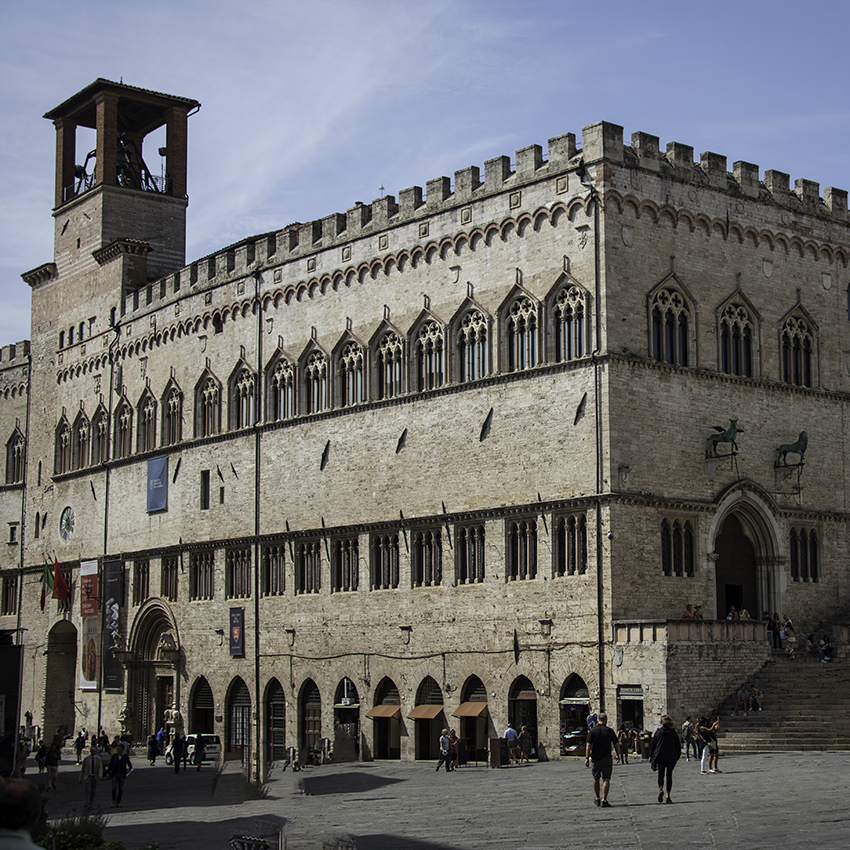
Palazzo dei Priori (Town Hall), stands opposite the cathedral, with the main entrance on Corso Vannucci. This large building, in Italian Gothic style, was built in the early 1300s. On the side facing the piazza are a griffin, the emblem of Perugia, a 14th century bronze lion, and some chains, from where the keys of Siena were displayed after victory over the Sienese in 1358. Inside is the impressive meeting room, the Sala dei Notari. On the second floor is the Municipal Library. The building also houses the National Gallery of Umbria.
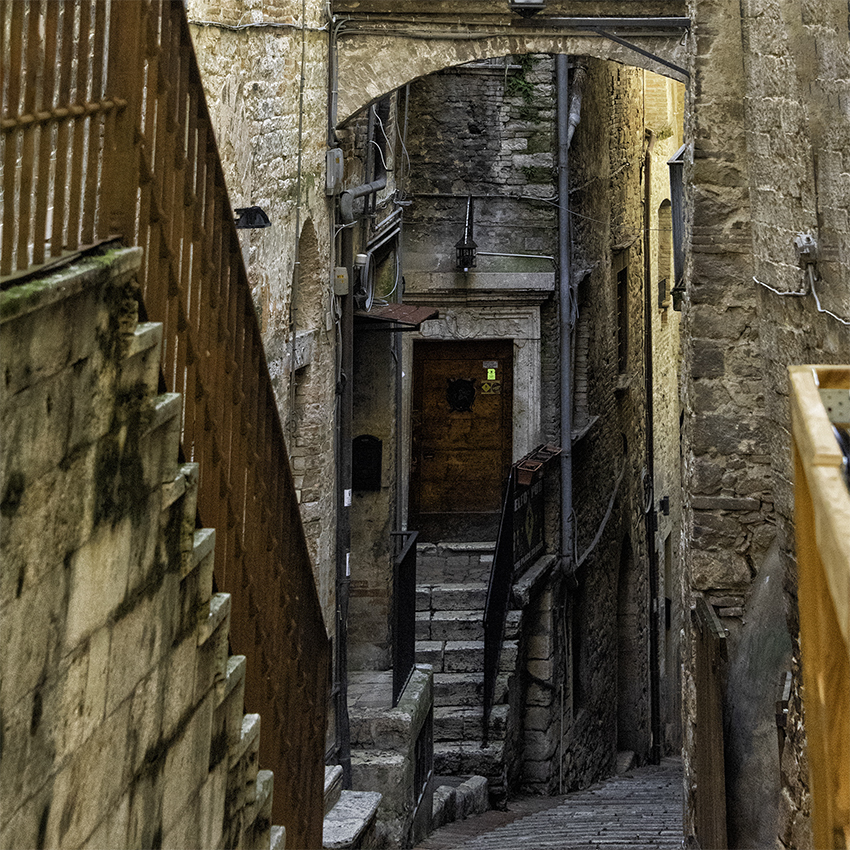
For many of the streets of Perugia, you do not walk the town, rather you climb it!
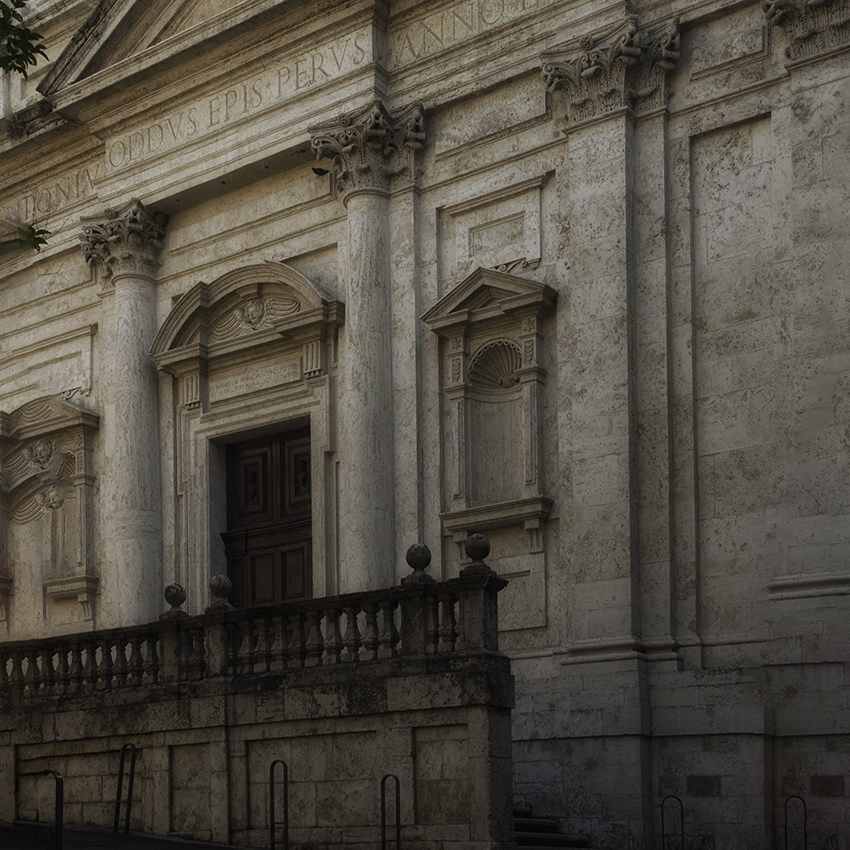
As you walk the small streets you will come across many examples of the grand architecture of the city.
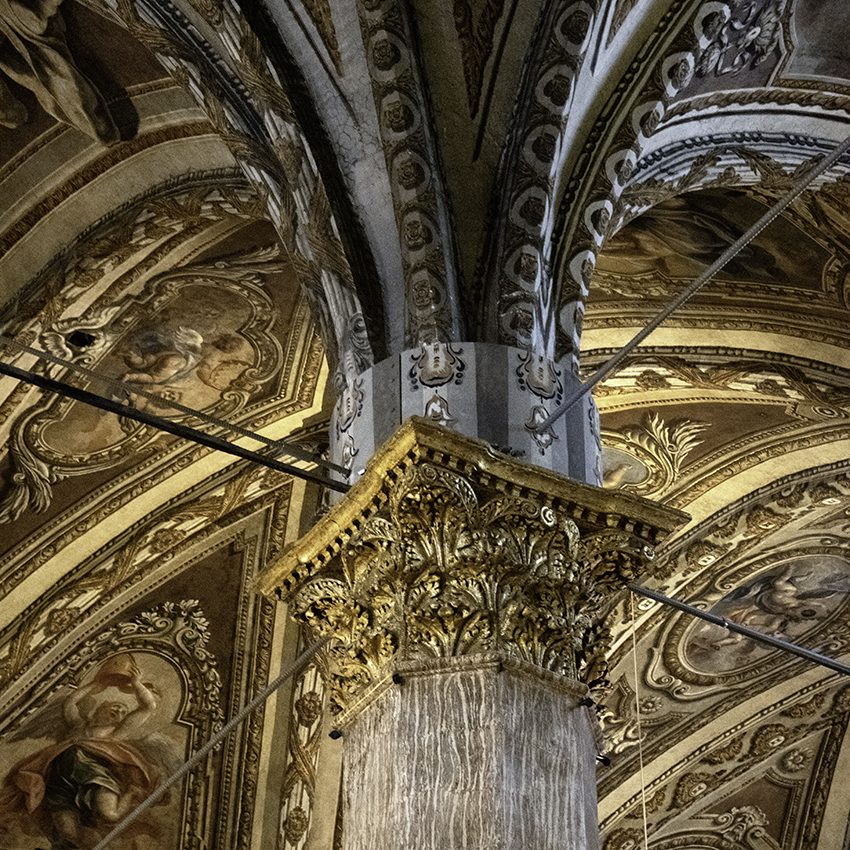
Work on the cathedra commenced took place from 1345 to 1490.
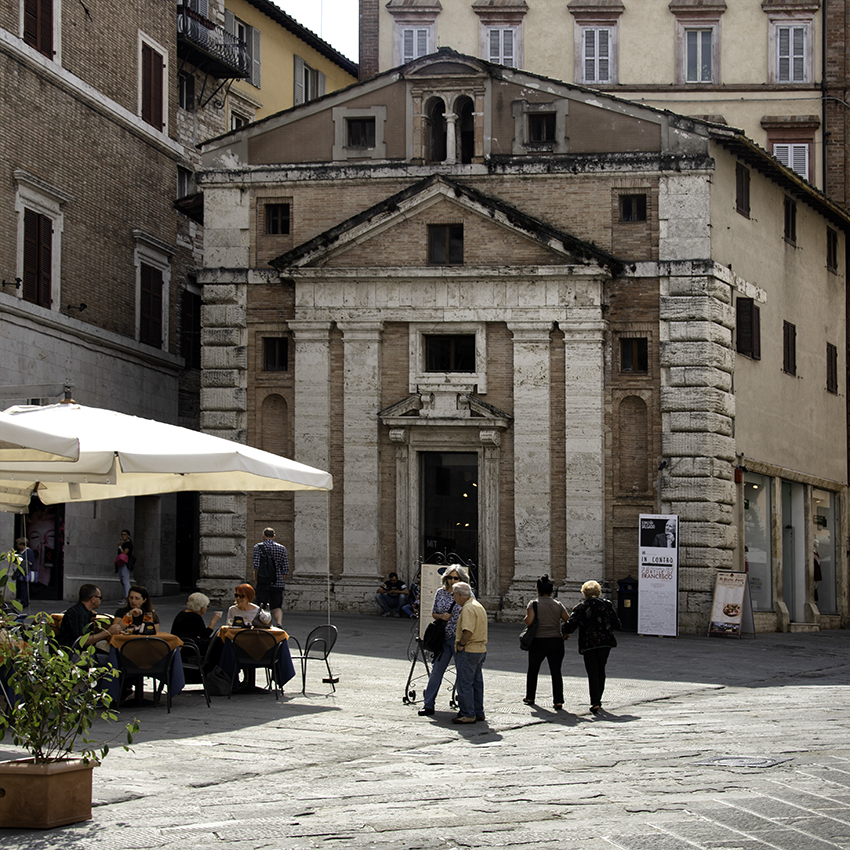
Walking down Corso Pietro Vannucci the street is lined with shops and many small piazzas, such as here, at the Piazza della Repubblica. There are numerous cafes and restaurants along the way.
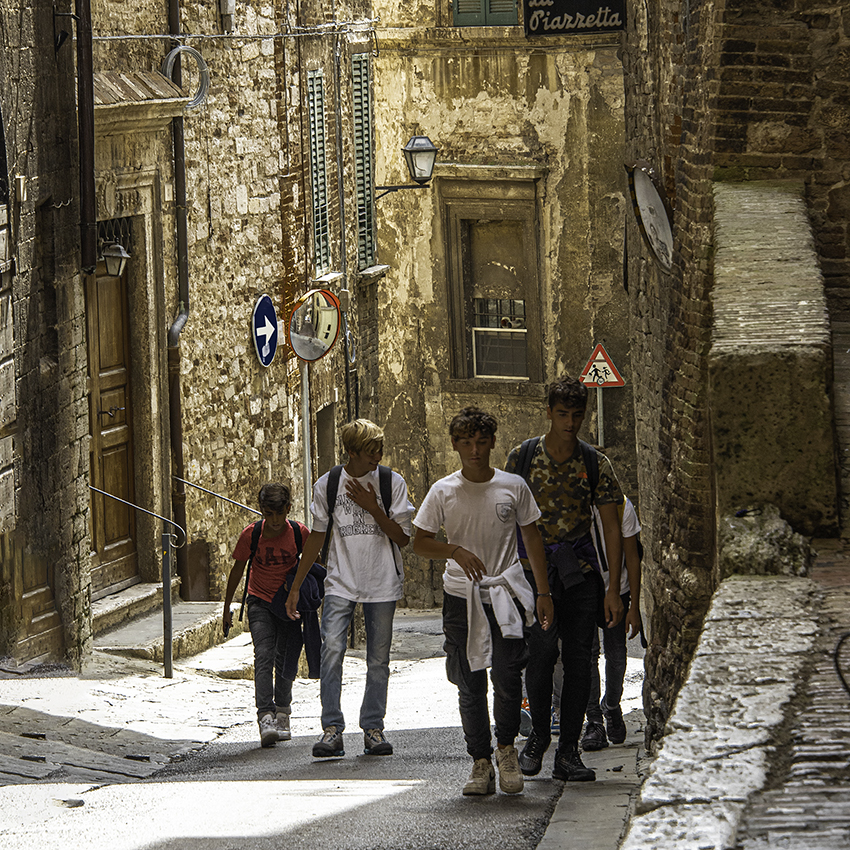
Perugia streets are narrow and hilly
Social Media
