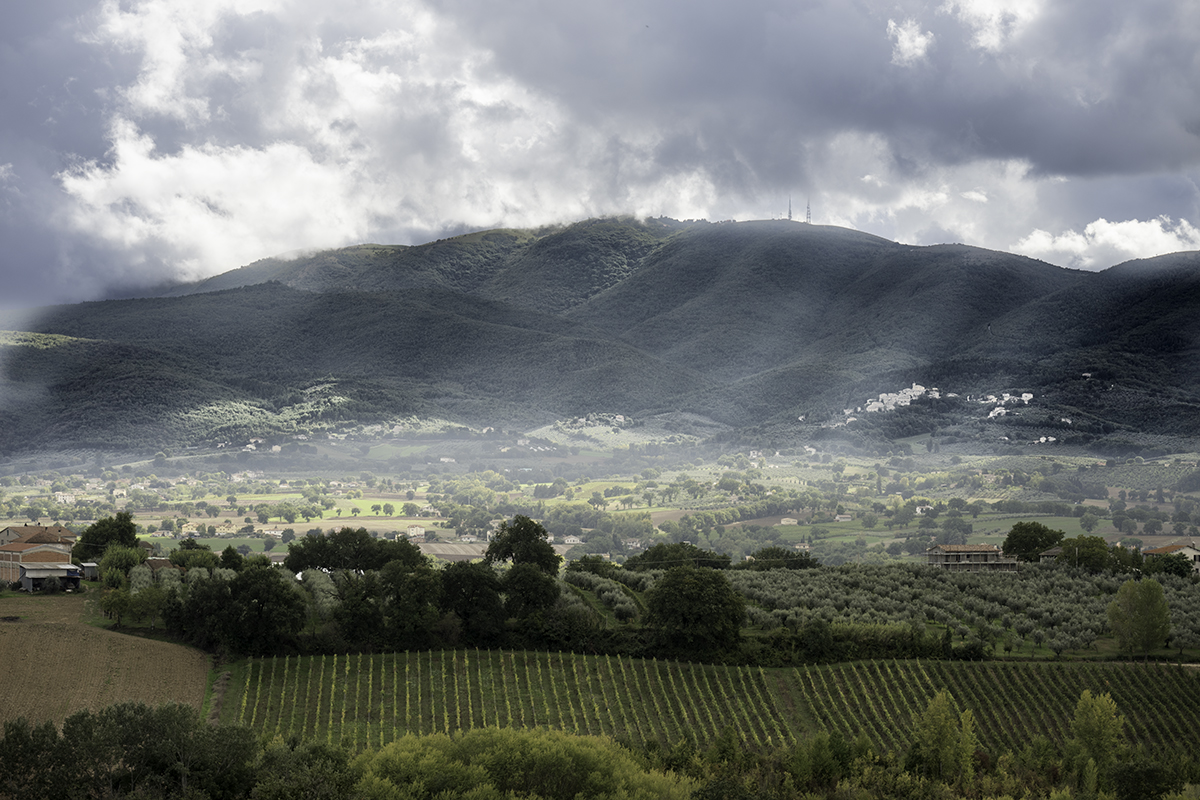
Our Stays in Umbria
In Umbria we stayed in three locations: Collepino, Fonte Sala (outside of Montefalco) and Parrano.
Collepino
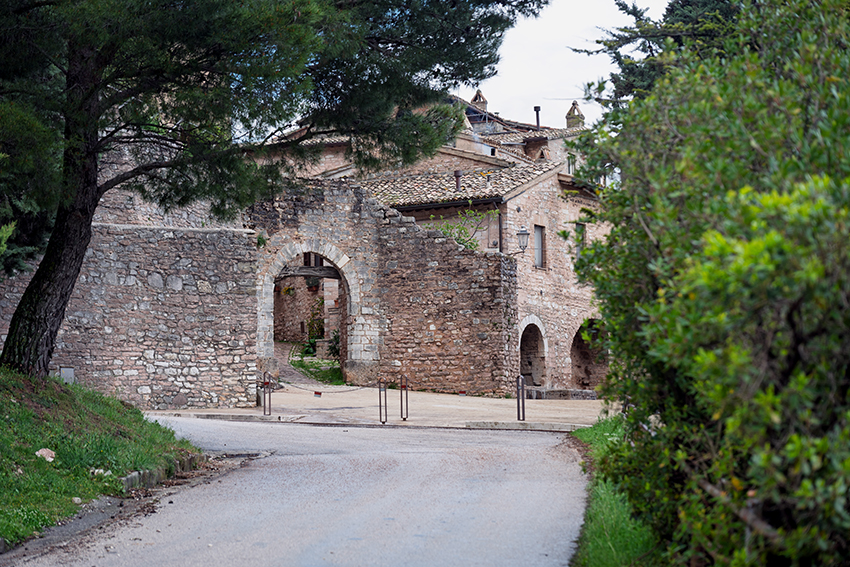
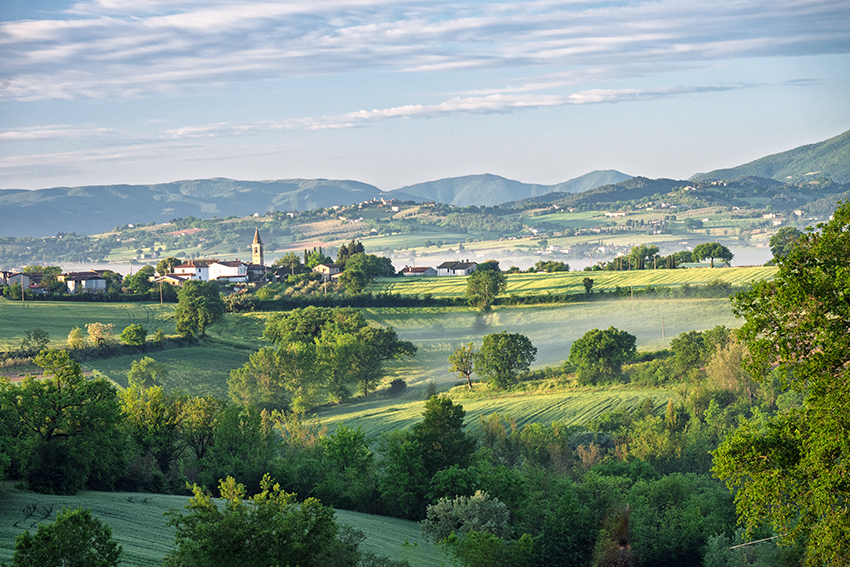
The town of Collepino is a hamlet of the town of Spello (7.5 km away) and stands on the side of Mount Subasio overlooking the Chiana River Valley. The town dates back to the 13th Century, when it was where where workers of the nearby Abbey of San Silvestro lived. Then nobles built a castle with defensive walls. All went well until 1535 when Pope Paul III ordered the destruction of the abbey and the town of Collepino as they harboured the members of the noble Baglioni Family - opponents of the papacy. The medieval castle is gone but some of the walls remain along with with parts of the seven towers. I enjoyed walking through one of the original entrance gates to access our apartment. Staying in Collepino was very pleasant. It is a town of about 25 residents. On the weekends more people would drive to the town but during the week, things were very quiet.
Spello was a short drive away, although the road is very narrow. When an oncoming car comes along, care has to be taken to find a place to edge over. That was easy during the day, but I must admit I went out less in the evening as I did not want to take on the road in the darkness of night. One of back roads had less traffic so the experience of meeting another car would be lessen, but the gravel road was steep with tight curves.
We really enjoyed our time here and will most like return. It was so pleasant to live in a small village like this. The only downside was the narrow road up from Spello. Fine in the day where it is easy to see where you are when pulling over to let an oncoming car get by. A little more difficult in the night when you can't clearly see the edges of the road.
The area around Collepino
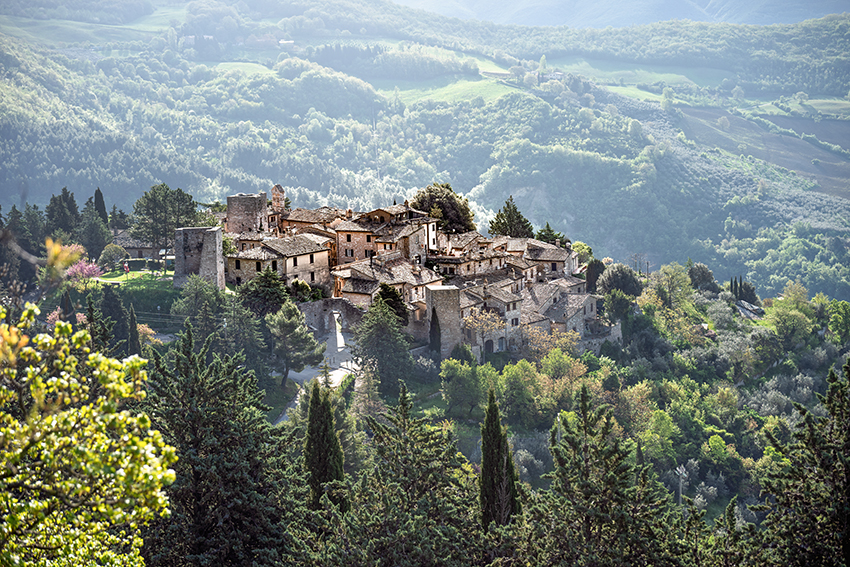
- DSC_6334-850-Collepino.jpg
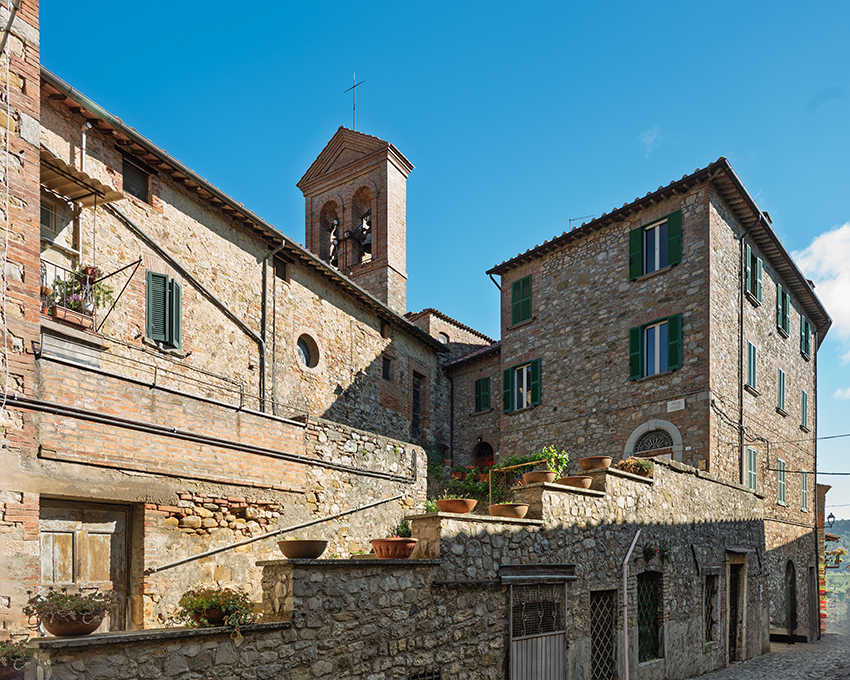
We stayed in the small town of Collepino, a medieval village that remains after the castle and defensive walls were destroyed by the Pope's armies. The town has a population of around 25 people.
- DSC_6671-850-Collepino.jpg
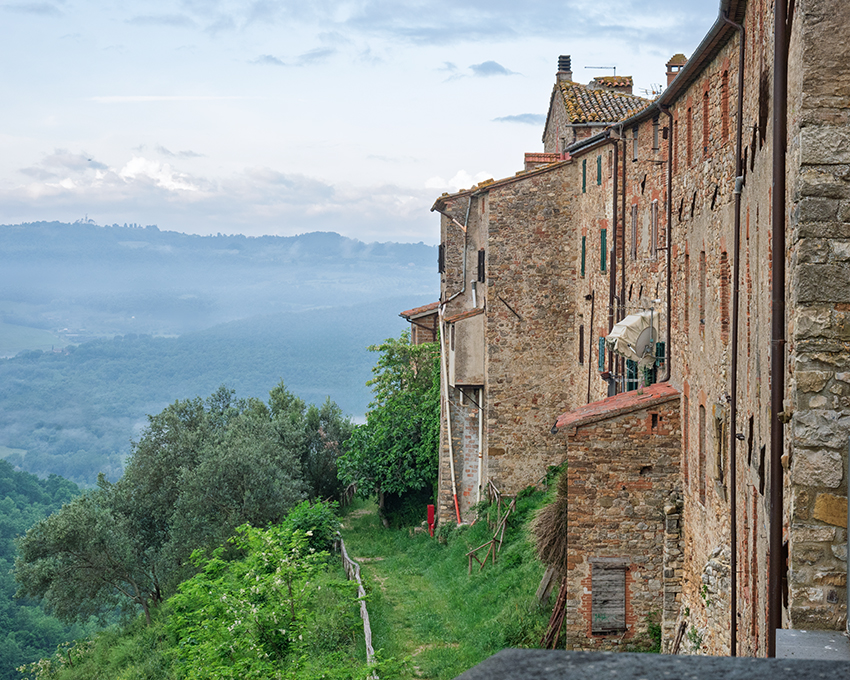
The old medieval gate through the walls remains. The village has a number of walking alleyways along with a church (of course), but also a restaurant and a bar - typically open on the weekends. The village is about a 25 minute drive from the town of Spello.
- DSC_6173-850-collepino.jpg
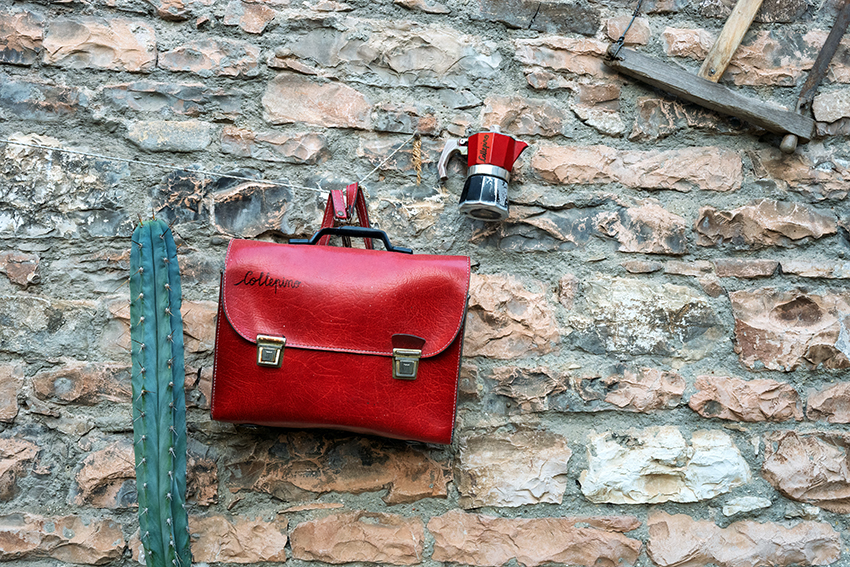
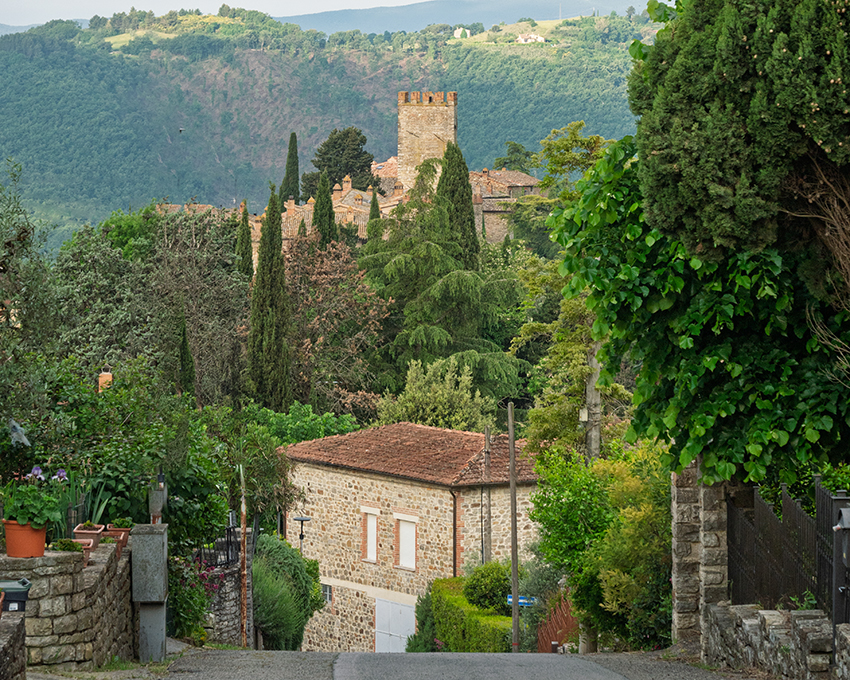
Collepino must have a Director of Photography! The small town is full of attractive little scenes. I must admit I kept my eye on the red coffee pot!
- DSC_6513-850-boscodisanfrancisco.jpg
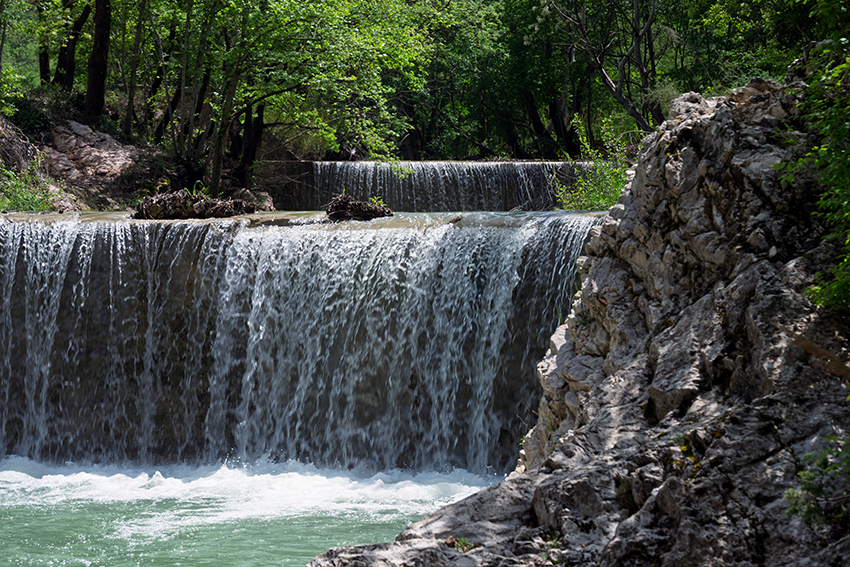
Waterfalls along the Tescio River in the Bosco di San Francisco
- DSC_6702-850-Assisi-sopra-Minerva.jpg
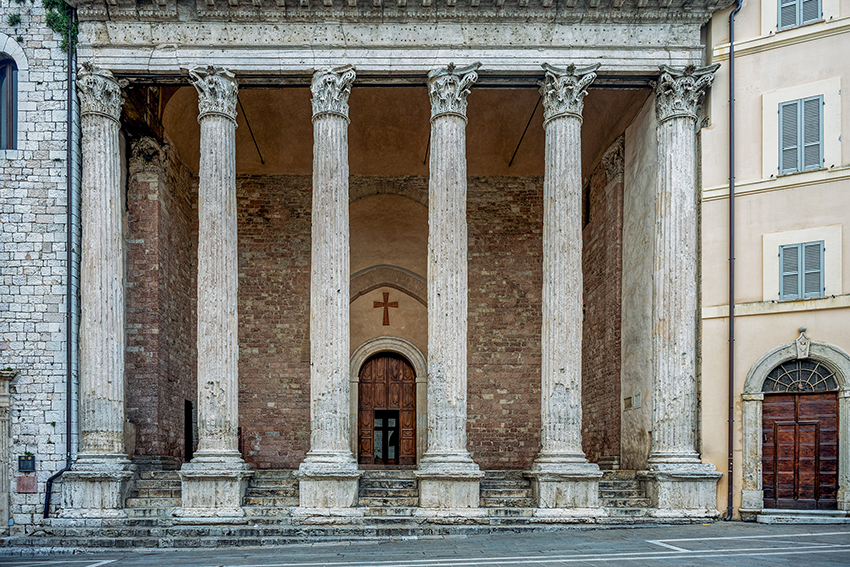
Santa Maria Sopra Minerva is a gothic church that is built within a 1 Century BC Roman temples built to honour the goddess of wisdon, Minerva. It stands in the Piazza del Comune in Assisi
- DSC_6697-850Assisi-SantaMariasopraMinerva.jpg
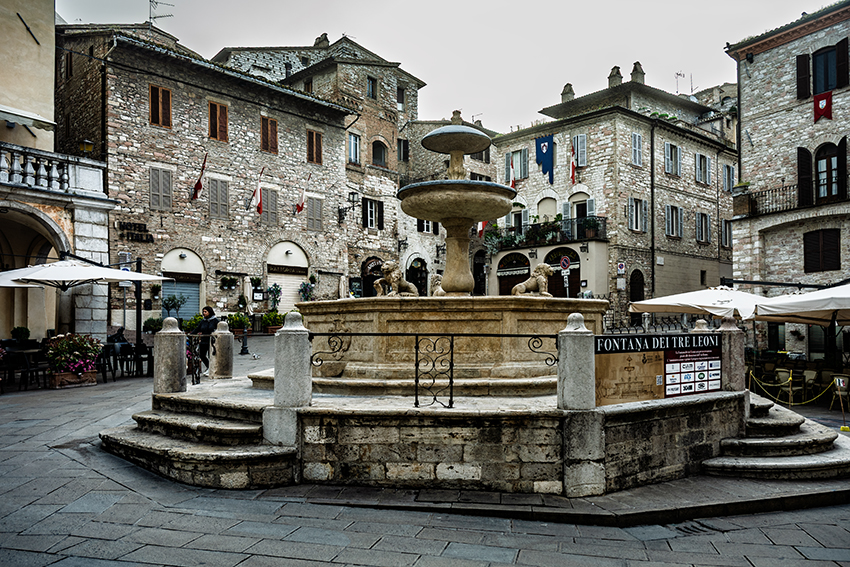
Assisi - Fontana dei Tre Lioni - the basin has nine sides, the fountain is decorated with three lions. Built in the 16th Century, updated in 1762.
Exploring
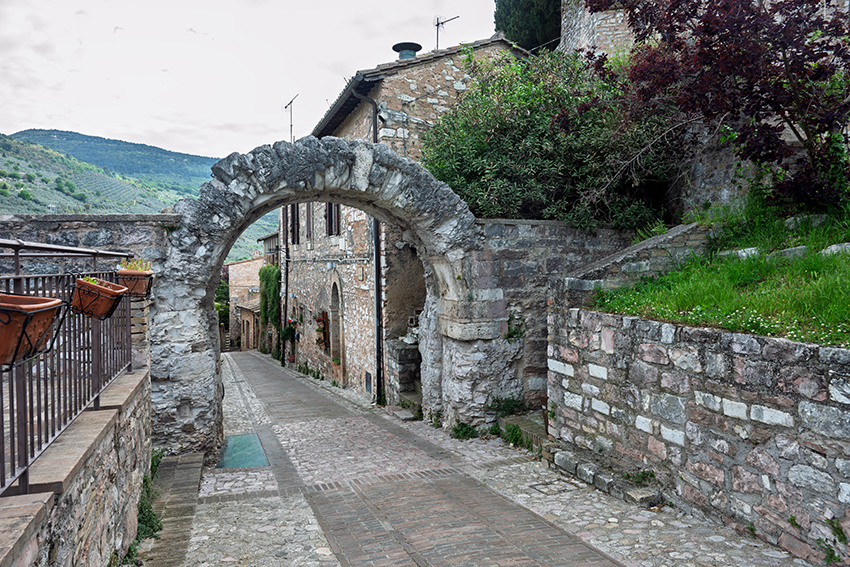
Photo: Spello, mytravellinglens.com
Spello
About 7.5 km down a narrow road, with limited areas where two cars can pass, is the walled town of Spello. It is one of I Borghi più belli d'Italia (The most beautiful villages of Italy). A designation warranted given the beauty of flowers and stone buildings. At one time a Roman colony under Constantie the Great, there are some remains on Roman architecture, such as the Porta Consoloare, Porta di Venere and the Arch of Augustus along with the remains of an amphitheater. There is a parking lot at both the top and the bottom of the town. Be prepared to walk and climb the hill as the town is built on the slops of the mountain hills.
Karen and I spend one day just walking the streets and having lunch. The meal was fine but the restaurant staff were overly loud with a table of Americans who were pondering the selection of wines to purchase and have shipped home. I returned for second visit on a Sunday morning. Fewer people walking around the town and I explored some of the other gates and back streets.
Abbey San Silvestro
What remains of the Abbey that was destroyed by the Pope's army is a two km walk from Collepino along the road that goes up and over Mount Subisio. Other than part of a tower and the church which was rebuilt in the 15th Century, the Abbey was totally destroyed as Pope Paul III suspected supporters of the Baglioni family took refuge there. The original aspe and the crypt below the church remain from the original structure. Today a religous order lives in newly constructed buildings. A pleasant walk up the road but not much to see.
Bosco de San Francesco
Our goal was to avoid any crowds. Assisi would be the busiest town in the area. But the Boco de San Francesco, The woods of San Francesco is below the town. The 64 hectares park was the location of the former monastery of Santa Croce. I enjoyed visiting the Santa Croce church and the walking trails along the Tescio River with a series of weirs creating beautiful waterfalls. Crosing the the river is the Ponte dei Galli, a travertine bridge that dates to 1356.
Assisi
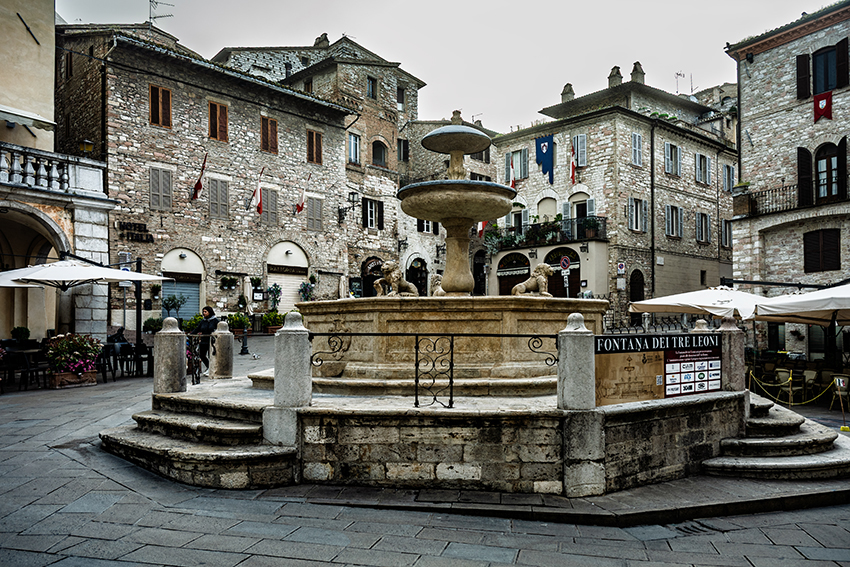
Photo: Spello mytravellinglens.com
I was not going to visit Assisi because of the crowds of people visiting the town. Just driving by I was part of the traffic congestion. But I decided I would spend time in the old historic centre away from the Basilica of Saint Francis of Assisi (128 to 1253). The town is the birthplace of two saints: St. Francis of Assisi and Saint Catherine of Siena. The town is the destination for many pilgrims. I drove up towards the upper parts of the town and found the Parcheggio Sava Matteotti in the Piazza Giacomo Matteotti. There was an underground tunnel to walk through and an elevator that took me down a couple of floors and I waked out onto a street that led directly to the Piazza del Commune, the centre of the historic centre. On the map it looks like it was miles away but actually only a 10 minute or so walk. So getting in and out of Assisi was very easy.
I just scraped the surface of the town. I walked and enjoyed the architecture. The Chiesa di Santa Maria sopra Minerva is a gothic church with a greek-temple facade. The church is built inside a converted 1st Century BC temple once dedicated to the Roman goddess of wisdom - Minerva. The Corinthian columns are pure Roman imperial architecture. Impressive. the Fountains of the Three Lions was built in the 16th century and updatd in 1762.
I know we will return to Collepino in a year or so and another visit to Assisi is in order.,
San Marco, Fonte Sala
Our second base is a return to the beautiful estate, Fonte Sala. We have stayed here a number of times, each time declaring we will return. The history of Fonte Sala goes back to 1913 when Camillo Montalcini bought Fonte Sala - a farm with fields. In 1997 farm operations ceased and the house renovated and converted as a tourist accommodation. The work took over five years and resulted in two independent houses added as well as the renovations to the main house. This may be our last stay here, unfortunately, as the family is converting the estate from independent apartment rentals to an estate wedding venue.
Montefalco
We have always enjoyed the walled town of Montefalco - even after last year when I was hit by a car while walking on the street going to the Piazza del Comune! Oh well, accidents happen. The town has a laid-back feel, and you will not feel like you are being crowded out by other travelllers.. This year I specially returned to visit the San Francesco Museum Complex. The Church of San Francesco holds impressive frescoes by Benozzo Gozzoli which depict the life of San Franesco.The connected buildings hold artifacts as part of a broader museum. There is also a museum of wine and the history of the Sagrantino grapes in this specially designated area.
Montefalco, San Marco - Fonte Sala
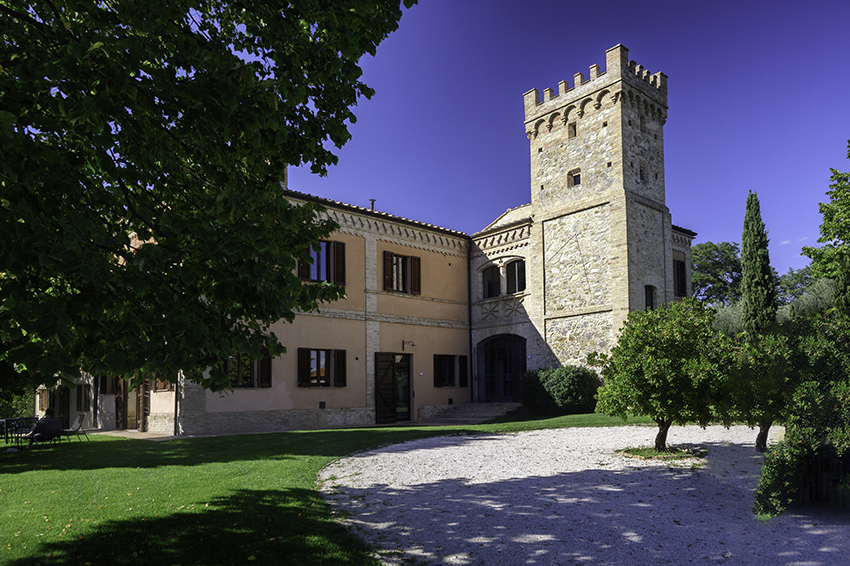
- DSC_8086-850-Font Sala.jpg
We are staying in the main house, our apartment is to the left of the tower, on two floors.
- DSC_8074-FonteSala.jpg
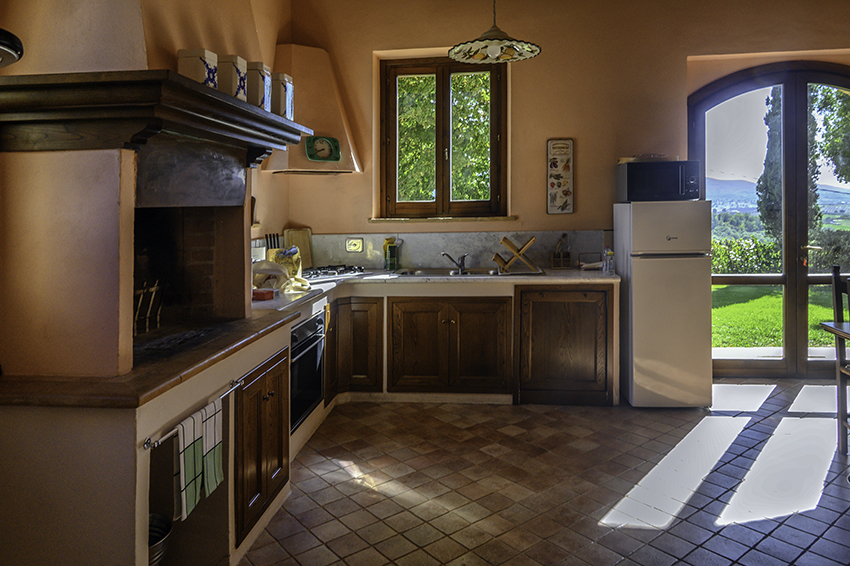
I love our large kitchen, on the ground level, cook and bring out the food and drinks to our table in the yard.
- DSC_8084-Font Sala.jpg
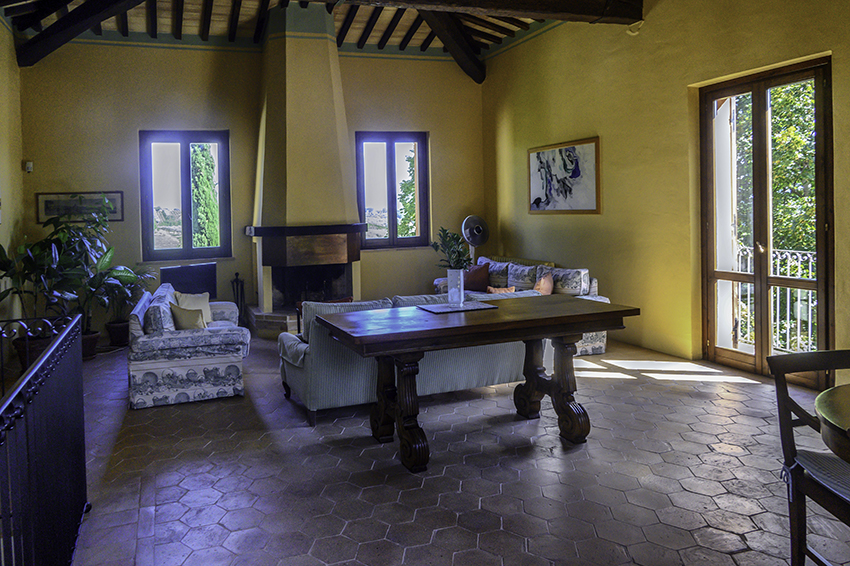
The top floor has a beautiful grand liing and dinning room.
- DSC_8083-Font Sala-850.jpg
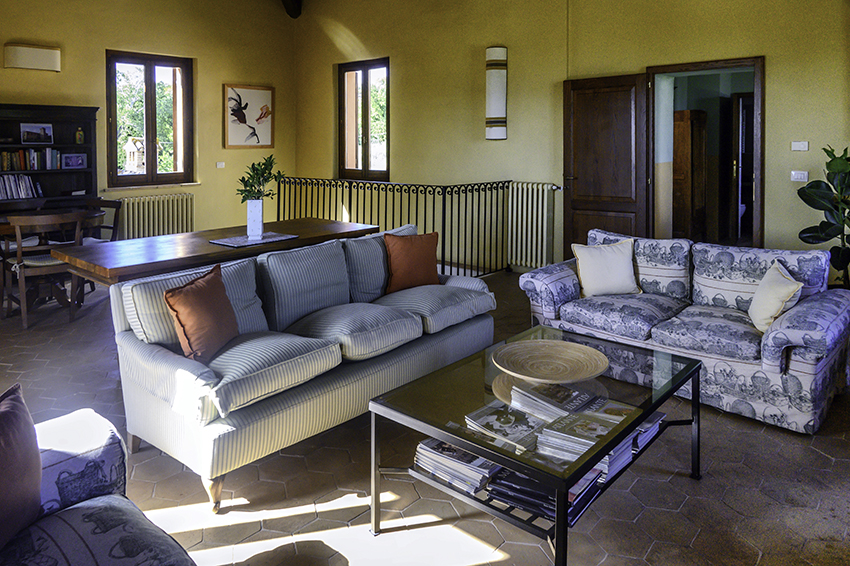
No complaints on the furniture. While some rentals do not have enough furniture, the big couches are appreciated.
- DSC_7928-850-FonteSalaLandscape.jpg
Looking over the vineyards to the small village on the next hill.
- DSC_7944-850-ClingingCloud.jpg
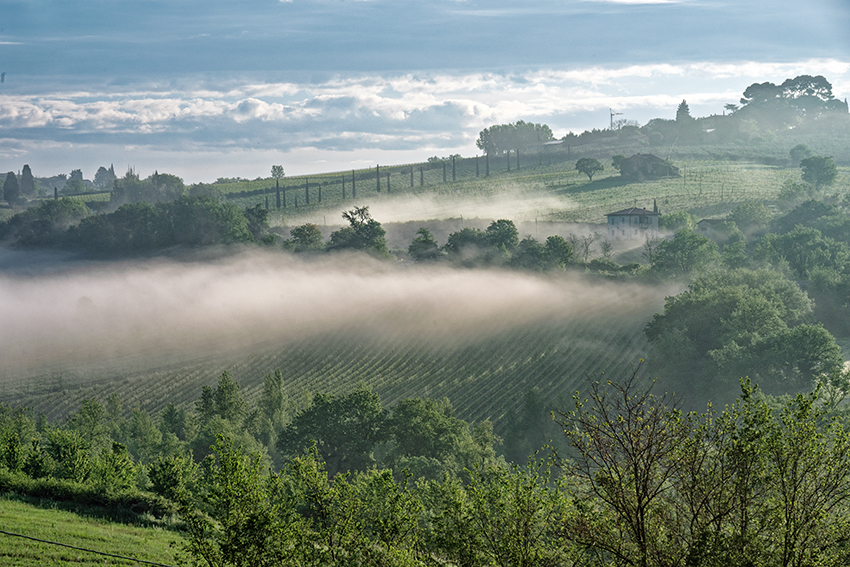
In the morning the clouds seem to cling to the vineyards
Parrano
Our last stay in Umbria was the town of Parrano - a thousand-year-old medieval village. We rented an entire house which was just up the hill from the castle and the historic centre of the village. The castle is an unassailable fortress It was administered by powerful families of the region and later, in 1773, Pope Clement XII decided that the village should become a Principality with a strong autonomy, The village experienced the phenomenon of depopulation and today it has just over 500 inhabitants.
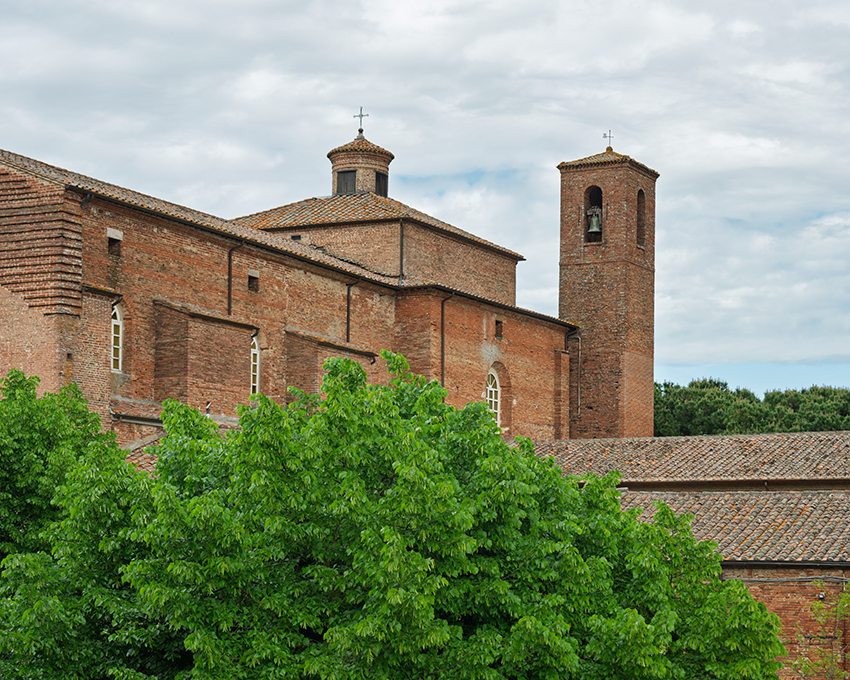
The Baroque Church of Santa Maria Assunta is the only church inside the fortified historic centre but it, as with most of the inner town was closed. This is not a town that thrives on tourism. While that made things quite quiet, it was also very pleasurable.
There is a small store and of course a great bar in the area outside the walls. Other than that, it is a 10 minute drive down to the larger town of Fabro Scalo. The Co-Op has much of what we needed in terms of our food shopping needs. Anopther advantage of Parrano as there is an entrance/exit to the A1 autostrada.
Parrano
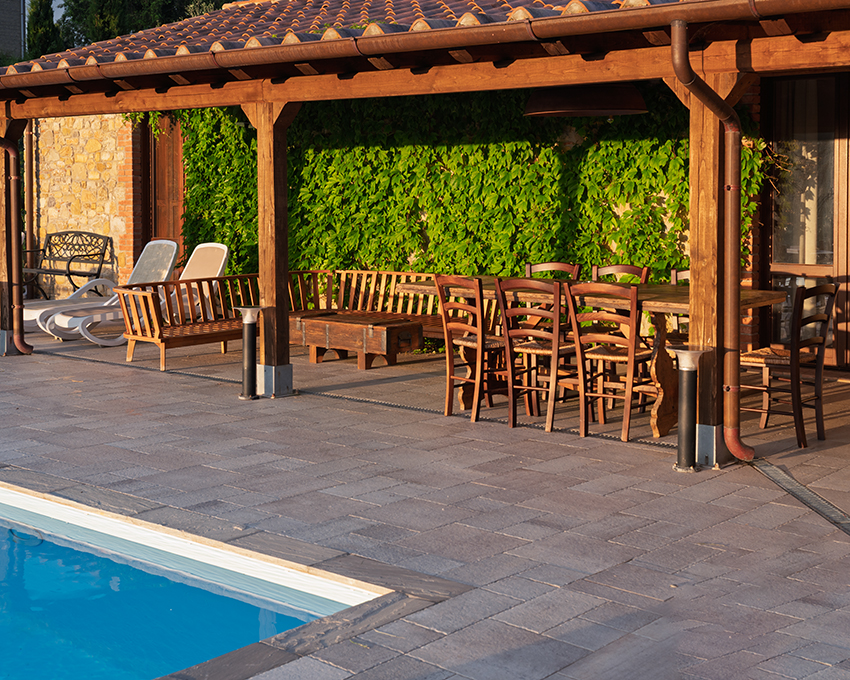
- DSC_8231-850-Parranohouse.jpg
We enjoyed the patio area right outside the door of our house in Parrano. It was April/May, and Italian pools are not heated - brisk swims!
- DSC-8227x850-parrano.jpg
Beautful gateway into the innter village behind the walls of Pranno
- DSC_8235-850-Parrano.jpg
What buildings form part of the defensive walls of the town, that run along the edge of the cliffs that created so a strong defense of the village and castle.
- DSC_8723-850-Pranno.jpg
The castle tower stands high above the walled village of Parrano.
- DSC_8729-850-Panicale.jpg
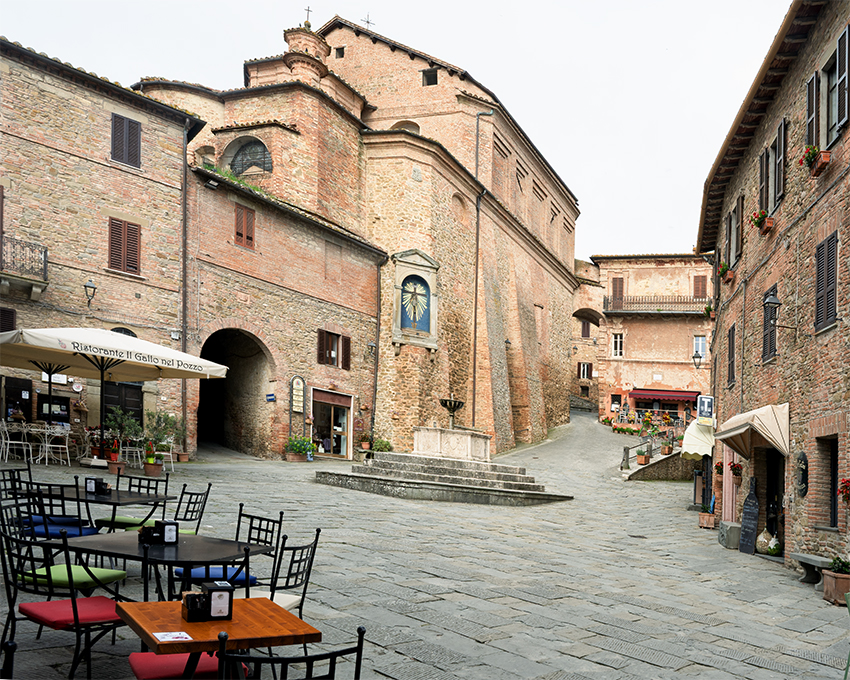
Panicale left a strong impression. Walk through the main gate into the piazza, then follow the small streets that follow the cicular shape of the protective walls. Be prepared to climb and the streets work up in levels. The cafes in the piazza of course have great coffee to enjoy when you are finished.,
- DSC_8406-850-Città-della-Pieve.jpg
Città della Pieve is a large walled town of old brick and stone buildings - unfortunately we arrived just before noon and only had a short time before the town started to shut down for the afternoon. Also, there was a large funeral service taking place at the church so we could not go inside to enjoy the architecture. But we found a good restaurant for piazza and enjoyed out time in the town. We had planned to return, but the time in the Parrano area just flew by.
- DSC_8502-850-Carnaiola.jpg
Carnaiola is a walled medieval town that stretches along a ridge. I entered through one gate and made my way down the main street. I was worried that I may get stuck on the street and questioned how I would get out, but the street travels the other other gate in the town.
- DSC_8605-850-Abbazia-Sei-Sette-Frati.jpg
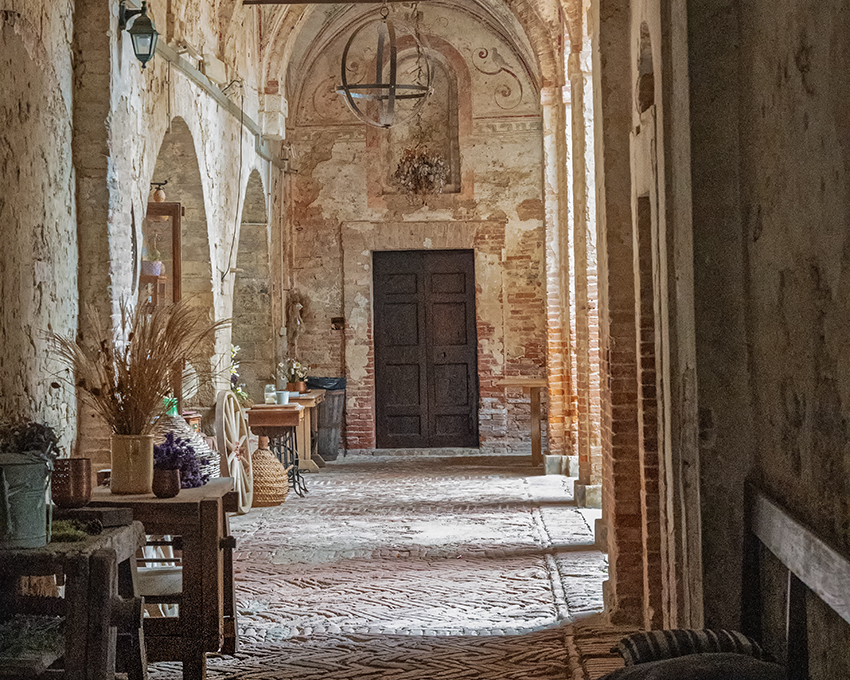
Abazzia sei Sette Frati is now an agriturismo, but small and intimate. The abbaye dates back thousands of year. I walked in not knowing it was an agriturismo and enoyed soaking up the atmosphere. The gateway is thought to have been designed gy the Italian archited Galeazzo Alessi.
Exploring
Panicale
Located about 50 km from Parrano (45 minutes) is the town of Panicale. The castle controled and defended the southern slopes of Lake Trasimeno. The town retains some of its defensive nature. The walled hamlet has three central squares, on three different levels, connected by a single main street. The streets follow the circular shape of the walls, just keep walking and work your way up the stairs to reach in next level. Start with the Porta Perugina to enter the town via the main piazza. , I found this to be a very beautiful walled town to visit. Park in the lot just outside the main gate and enjoy your walk along the streets.
Città della Pieve
An interesting town, located about 30 km / 30 minutes from Parrone. A walled medieval town perched on a hill top, with buildings made of beautiful warm red terracotta. We found a parking place along the street just outside the main gate and then walked to explore the town within the walls. The heart of the historic centre is Piazza del Plebiscito, where the dominant feature is the Cathedral. It would have been good to be able to have gone inside, however, a major funeral was taking place and it was impossible to get into the church. From the main square, the village divides into "tertiaries".We walked down a number of the streets and found the town be very scenic. We had a good piazza and then head out. We planned to return and see more of the town, but our time in this area of Umbria just flew by.
Val d'Orcia
One day I did drive to the Val D'Orcia area of Tusdany. I wants some of the beautiful landscapes of the area. But when I arrived I was reminded about the frustration ofe driving and photography. I saw many jaw-dropping sights to photograph but was frustrated as typically there was nowhere to pull off the road to take a photo. The two-lane roads are narrow, have no shoulders and by the time I found a place where I could safely pull off - well I was well past the scene I wanted to photograph. Staying the area, as we have on previous visits allow more time to plan and find the places that provide space to stop.
Monteleone di Orvieto
On my first drive in the area I came across the picturesque medieval village of Monteleone di Orvieto. The town is beautiful and perches on a hill it has views over the Val di Chiana, The town was founded in 1052 as a castle to guard the northern boundaries of the town of Orvieto. in 1643 the town was destroyed by the troops of Florrence. Remains of the medieval walls and the northern gate remain.
Carnaiola
Driving to and from Parrano I would see a town high on a ridge. I though it was Fabro Altao - if there was such a town - but it was the town of Carnaiola. A town with a main street that runs from one gate to another. There is a vibe in the town but don't go here expecting to see a list of sights! Still I enjoyed my walk about.
Abbey of the Seven Friars (se sette frati)
This is an ancient abbey dedicated to seven Roman martyr brothers, sons of Saint Felicity who lived in the second century. At one time this was known as the Monastery of San Benedetto (1136). I just walked in a enjoyed seeing the old interiors - all was quiet. At one point I thought a monk might approach me and ask me to leave. But as I found out, the owners have convered the abbey to a small agritturismo. Nothing glizy the original feel of the abbey clearly remains.